| L'elisir d'amore - Opra Cymru re-opens Grand Pavilion Llandrindod Wells |
At Opra Cymru |
| Opra Cymru- L'elisir d'amore , The Grand Pavilion at Llandrindod Wells , March 31, 2016 |
 The small town of Llandrindod Wells, in the very heart of Mid Wales, witnessed a special event on the evening of the 18th of March, just twelve days ago, when the town's only viable, middle sized theatre and concert hall, The Grand Pavilion (returning to its original, Edwardian name) re-opened after months of going "dark", much to the pleasure and relief of the whole town. Under new management, the venue opened its doors again to receive the penultimate performance by North Wales based chamber company, Opra Cymru, with a production of "Deigryn yn y Dirgel", their take on Gaetano Donizetti's most popular opera, "L'elisir d'amore" or the elixir of love.
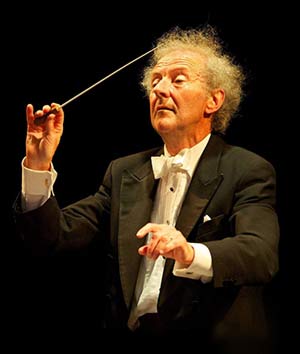
Two things make this company special: the first is that they produce chamber opera - versions of classic titles scaled down to tour smaller venues in our largely rural country of Wales (but scaled down only in the number of artists on stage and the number of musicians in the orchestra, in every other respect the production values are of the highest) - and the second, most striking thing about Opra Cymru is that all their productions are in the Welsh language. "Deigryn yn y Dirgel" translates as "a furtive tear" or "a secret tear" (Una Furtiva Lacrima, the opera's most famous aria for the tenor lead) - sometimes direct translation of a title just doesn't work and this title was thought to be more in sympathy with the bardic traditions of Wales - but L'elisir d'amore in Italian is described as a "melodrama giocosa", a playful melodrama rather than a comic opera, and "Deigrin yn y Dirgel" is faithful to that idea. The humour is carried by the characters and the story-line whereas the grace and beauty of the music make their own sweet way despite, rather than because of, the comedy. Donizetti's most often performed work was originally set in a rustic village in the Basque country of the 18th century, but director and Opra Cymru founder, Patrick Young (keen, I'm told, to make the art form more accessible to the audiences of Mid and North Wales) has set his "Deigrin" in rural Wales - when the lights go up on the action we could be just down the road at an agricultural show in Llanelwedd -! The naturalistic setting is created in the first act with livestock pens (including around the ten piece orchestra, who are penned in like sheep or cattle), folding chairs and high flats, indicating the wooden walls of a barn or a farm show stand. In the second act these flats are replaced by the flimsy walls of a very small marquee, as for a village wedding, and the orchestra are now enclosed by barriers of bunting festooned calico. The cast are costumed in a way totally familiar to rural Wales, especially Nemorino, the tenor lead, a farm worker in wellies, Parker jacket and peaked cap. We soon understand he is besotted with Adina, an impetuous and wealthy young woman farmer who has a more roving eye and is fascinated by the story of Tristan and Isolde (Esyllt) and the fatal love potion. When the swaggering Captain Belcore arrives on leave from the local army barracks (another local resonance for Mid Wales, where Brecon is home to the Infantry Battle School and a wing of the Gurkha regiment), he quickly scores with Adina and asks her to marry him, whilst Nemorino wishes he had Esyllt's elixir to help him win Adina's heart. Enter the travelling "quack" doctor, Dulcamara, plying his dubious wares to the locals. It's a wonderful situation comedy with twists and turns that all work out in the end with tenor and soprano leads re-united and happy. Patrick Young's choice of setting for the opera is so counter intuitive that it could add an inadvertent element of humour to the production but the laugh is on the audience because from the very first scene we realise that this is going to work. The young cast carry it off with total plausibility and in an easy, modern style. Nemorino, the lead tenor role, is interpreted by Rhodri Prys Jones who has the great gift of a seemingly effortless and natural voice - a true pleasure to hear - singing with intensity of feeling, his Nemorino is at first an annoyingly petulent teenager who in the second act, when push comes to shove, drops his adolescent attitude and becomes a man. His moment of truth being the "Una Furtiva Lacrima" aria. Aoife O'Connell is Adina, a powerful young Irish soprano. She is bold and courageous when attacking the high notes, but is not "over the top" in her characterisation, just hinting tantalisingly at the sensuality of her character. Captain Belcore is tackled by the pleasing and mellifluous bass baritone voice of Meilir Evans, you can believe he's a seducer, even if all that strutting and preening in his regimental khakis is a little absurd. The quack doctor and seller of fake potions, Dulcamara, is sung by the excellent, more seasoned baritone, Gareth Rhys Davies. With his virtuoso listing of remedies and what they can cure, his hilarious "business" with enormous rubber gauntlets, plastic disposable apron and goggles, suggesting the horse doctor or the AI man, he is both funny and ridiculous and the comic "Barcarole" that he and Adina sing in the second act is a delight. His Dulcamara is a wonderful old rogue of the kind we've all seen, propping up the bar at local pubs and hotels with their scams and anecdotes. In Italian opera the rhythm and musicality of the language are inextricably entwined with the music, yet it seems that the open vowels and singing quality of the Welsh language can just as easily marry with the music of Donizetti. Even the recitatives, those semi sung, conversational sections between the arias that carry the story along, seem totally natural and musical in Welsh. L'elisir d'amore contains some exquisitely beautiful music and conductor-musical director Anthony Negus' achievement in unifying the combined talents of a string quintet and a wind quintet is impressive. Just ten musicians succeed in giving us the full musical experience of an Italian opera classic. Negus was staff conductor with The Welsh National Opera for many years and is now music director of the Longborough Festival Opera in England. The excellent, scaled down arrangement of the score is by Tony Burke. The Grand Pavilion has good acoustics as a concert hall for classical music, making it a perfect venue for the chamber operas presented by this little company. After their performance in Llandrindod Wells, Opra Cymru set off straight away for Blaenau Ffestiniog in the north and their last date of this tour, which has taken them all over Wales. Their performance at The Pavilion marked the beginning of a new era for this Mid Wales theatre and concert hall, which in the past has hosted balls, dance and theatre performances, choirs and orchestras, including the superb Sinfonia Cymru, who hopefully may return to give concerts now the Pavilion has a new management. ____________________________________________________________ From a professional dance back-ground, Jenny March is a dance and music writer and critic specialising in Wales and Latin America. Throughout the noughties she was the only specialist dance critic and reviewer with The Buenos Aires Herald. Between 2009 and 2011 she also had a regular dance column in Planet Magazine Wales. She continues to contribute on occasion to The Buenos Aires Herald and to other periodicals in Argentina and Europe as well as contributing to Theatre in Wales. |
Reviewed by: Jenny March |
This review has been read 1728 times There are 11 other reviews of productions with this title in our database:
|
