| "I cannot fathom why the Welsh Government has so utterly lost its way"- Unusually Strong Words |
Culture in the Senedd |
| Culture Debated , Senedd , October 27, 2025 |
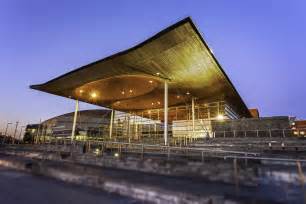 Culture was debated in the Senedd on 18th June 15:56-18:01.
 From the 7500-plus words that were spoken: Deputy Presiding Officer: “We move, therefore, to item 7, the open debate: arts and culture—nice to have or integral to the future of Wales? I call on Heledd Fychan to open the debate." Heledd Fychan: “Thank you, Dirprwy Lywydd. The topic before us today is arts and culture, and the big question is: are they nice to have or are they integral to the future of Wales? I will be making the case that they are absolutely integral, that they are central, not only to our identity as a nation but to solving some of the greatest challenges that we face, from health to tackling poverty, from education to our economy. "Slashing funding rather than investing in these sectors, never mind showing any sense of ambition for them, has been a misstep by the Welsh Government over the last few years, leaving Welsh culture in a situation of crisis. “...I cannot fathom why the Welsh Government has so utterly lost its way in respect of these areas. Because the arts do not exist in a silo, they are an integral part of so many different policy areas, making a genuine difference in terms of an individual's ability to contribute to society. It also makes economic sense, with various studies showing that, for every £1 spent in these sectors, £4, at least, is generated for the economy. “...Amgueddfa Cymru alone has circa £100 million-worth of capital maintenance programme backlog across all national museum sites. Also, it doesn’t even bring budgets back to what was being spent on arts and culture at the beginning of this Senedd term, nor reflect how much these sectors were decimated in the 2024-25 budgets, leading to hundreds of job cuts. “...How did we get to the point of thinking it was acceptable to ask people in a public consultation if they wanted a music service or a museum, or did they want their bins emptied; if people wanted a library or for their elderly relatives to receive care? “Or, as we heard during a debate last year, having a previous culture Minister who was happier making the case for cutting funding to the arts so that more could be invested in our NHS, rather than advocating about the power of the arts when it comes to health, and how arts programmes and social prescribing can actually save the NHS money, as demonstrated by some truly brilliant arts and health programmes across Wales. "Investing in one should not mean not investing in the other. They are interconnected and all are essential. And by embedding those connections, the money available to spend can be spent more effectively and impactfully. “...Because what we’ve seen here in Wales is a Labour Government who seem happy to oversee a decline in the number of pupils taking drama and music at school, and the arts becoming as they were in the past—only truly accessible to the few, rather than all of us. Content to oversee libraries, museums and even concert halls lying empty or permanently closing; that we have no official national theatre in the English language; that our internationally acclaimed national opera company faces an uncertain future; or that the only junior conservatoire in Wales is no more. Should we not be up in arms about all of this? “I’m angry, I'm saddened, and I'm fed up of hearing so many politicians trying to justify the cuts or trying to pretend that the cuts aren't as bad as the statistics show. Enough is enough. Today, we must recognise the gravity of the situation, and the fact that culture is in crisis. If we want Wales to prosper, and if we want the best for the people of Wales, then we must rethink the position of culture and the arts within the Government, and also how we fund them.” * * * * Gareth Davies: “Culture isn't a luxury. It is not an extra to be indulged in in times of prosperity; it is fundamental to who we are. It is how we tell our story, cultivate our humanity and shape our future. “Yet for too long that story has been distorted, not only through a funding regime that treats the arts and culture sector as dispensable, but through a political culture that claims ownership of Welsh culture and sets out a remit to the sector that encourages the frivolous waste of taxpayers' money. Meanwhile, the core pillars of our arts and culture sectors, such as our national theatres, museums and opera, are hollowed out and crumbling. “...with limited funds, the money allocated is often misdirected. The Welsh Government's remit letter, the formal document sent to arm's-length bodies like the arts council and Amgueddfa Cymru, instructs them to waste money on frivolous ideological schemes rather than investing in pillars of our culture. "That remit should be a framework for delivering excellence and giving the sector the freedom to ensure creative expression. Instead, it has become a wish list—[Interruption.] I’ll just finish my sentence. A wish list of ideological jargon, instructing cultural bodies to meet vague social and environmental targets, rather than supporting their core purpose and nurturing the preservation of Welsh culture. ”..The result is money is siphoned away from the cornerstones of our cultural life, our museums, our heritage sites, our orchestras, our language, and redirected towards radical initiatives that score political points but do little to enrich the nation. Welsh National Opera, once the pride of our creative exports, now faces existential threats. “Our museums are quite literally falling apart, whilst they also plough money into decolonisation... unique sense of responsibility to chronicle not just its own story, but the tapestry of human civilisation itself. That sense of responsibility and intellectual curiosity on which we led the way is dying here in Wales, due to a Government that prioritised dissertations on Welsh cakes, rather than preserving our heritage for the benefit of the next generation. * * * * Heledd Fychan returned to issues of governance: “Do you agree with and support the principle of arm's length, which organisations such as the national museum are governed by, and also appreciate that they are governed by a code of ethics, so that they are bound by this code of ethics in order to achieve accreditation? “Surely, you're not suggesting that we should have a say in how these cultural organisations fulfil their remit, which is in the remit letter—those are guidance only. Surely, we should support that arm's-length principle, and that they abide by a code of ethics, because what you're suggesting is that they would break that code of ethics completely and lose accreditation. That's the actual logical conclusion of your argument.” * * * * Gareth Davies spoke of the submission of cultural institutions to governmental influence: “They're creative people in creative industries and if they're being governed to the point of—. You know, saying 'arm's-length bodies', but that only goes so far as arm's-length bodies. The funding comes but it comes with caveats as well, which are also things like the accreditation, which you're saying. We're saying: give them the funding, but then also the freedom and the autonomy to do those things. “The arm's-length bodies in the arts and culture sector must be refocused, with many of them straying far from their original mission. I've been vocal in criticising the approach of these bodies, especially their disregard for classical music and the opera sector, areas in which Wales has traditionally excelled. “What I'd like to see the Welsh Government build on is a properly funded arts and culture sector where spending is in line with European nations, following the recommendations of the Senedd's culture committee; a future where our museums don't apologise for our past but interpret it with pride, context and complexity; a culture sector that unites not divides; a remit set for the sector by the Welsh Government that ensures spending on the cornerstones of cultural life and not silly side missions that cause money to be wasted on the bizarre ideological interests of the modern left.” * * * * Sioned Williams: “It's a well-established truth that, for a minority people, without the anchorage of a nation state, culture becomes the vessel through which identity, dignity and memory are sustained. As the Welsh writer and critic Raymond Williams reminded us, 'culture is ordinary.' But, as he also noted, in Wales, that ordinary is also extraordinary, a quiet act of defiance against the tides of political marginalisation and linguistic erasure...a dying culture leaves no archive. “Processes such as linguistic loss or secularisation are rarely recorded. It is to the cultural record that we must turn to measure their effects. In this context, culture is not decoration, it is survival.” * * * * Jack Sargeant: Presiding Officer, in the opening debate, I do hope, for the remainder of the opening debate—an important debate, and I welcome this debate—that it isn't like logging on to our social media accounts, where we're stuck in an echo chamber where opposition Members only pick out the negatives, Presiding Officer, the negatives that they seek out, ignoring the words of the sector, who have welcomed additional funding, grasping onto the same lines that they would have written even before the funding that they voted against was awarded. “So, if they're not prepared to celebrate what the sector has said, and I do hope they take the opportunity to do so, then I will, because our support is making a real difference, not only for large-scale projects, but at the grass-roots level too. “It doesn't seem, does it, that the opposition Members want to celebrate what the sector is saying, and the sector—[Interruption.] Let me say what the sector has said. [Interruption.] Let me say what the sector has said: an independent local museum, when they received a recent funding award letter, and I quote, 'What has happened in the last 30 minutes here? I opened the email, started crying, texted our chair, who screamed down the phone, and went off to tell the other trustees. This helps us so, so, so much, and we are ridiculously grateful.' “So, Llywydd, let's also take the opportunity to highlight some local examples that I even hope opposition Members do take the opportunity to welcome today. “The future of the historic Blackwood Miners' Institute is now looking brighter, thanks to further funding. The building is a phenomenal example of working class history, and should be celebrated. “It was built by subscriptions of miners, built to host culture, and will continue to do so because of our funding. “This Government, Presiding Officer, has demonstrated its commitment and support for culture, defined in the broadest sense, across a range of policy areas, and it's right that we do that. It's important to remember that as well as funding from my portfolio. “For example, £1.5 million to support Amgueddfa Cymru's transition to sustainable energy through the Welsh Government's energy service this year." No mention was made of the capital expenditure backlog on the building. No mention was made of national theatre or national opera. Source: https://record.senedd.wales/Plenary/15148#A97894 |
Reviewed by: Adam Somerset |
This review has been read 304 times There are 32 other reviews of productions with this title in our database:
|
