| “One of the Most Pointless Tasks that You Could Actually Ask a Legislature To Do” |
Culture in the Senedd |
| Future Generations Commissioner at Culture Committee , Senedd , January 12, 2026 |
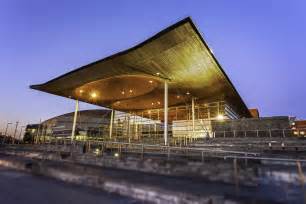 On 11th October Alun Davies MS in a plenary session spoke about the nature of legislation passed in Wales.
 "What we’re doing is piling up laws… which are never delivered, never implemented and which create burdensome and cumbersome demands on public bodies which they themselves are unable to deliver.” On 12th November he was among those on the Culture Committee for "Culture Bill: Evidence session with the Future Generations Commissioner.” Delyth Jewell was in the Chair. Mick Antoniw, Heledd Fychan, Alun Davies, Gareth Davies and Lee Waters were with her., Derek Walker and Sandy Clubb, policy lead for involvement, collaboration and culture, were present. Dr Sophia Woodley was there for the Audience Agency and Jacob Dafydd Ellis, director for external relations and culture at the office of the Future Generations Commissioner for Wales. * * * * From the transcript: POINTLESS Delyth Jewell: There's been great interest in this concept of a culture Bill, could you talk us through what it would do and why you think it's needed? Derek Walker: We proposed a culture Bill. On balance, I think legislation is going to be helpful for securing the long-term future of the strength of our culture in Wales, but I recognise that there is a lot that needs to happen besides that. Legislation, as we know, is not enough on its own to be able to make the impact that we want it to, so we talk about it being part of a package of measures. ...it can give clarity about what we're expecting of our public sector in terms of delivery. I think it has the opportunity to do something about ending the unequal provision, or the postcode lottery, that we might see in terms of culture. ...many of these aims could be achieved without legislation—I get that. It doesn't take away from the fact that resources are needed too, and this doesn't magic up resources, although I think it does help...there are risks that we enter a sort of more compliance-based approach with a culture Bill. Dr Sophia Woodley: ..governance mechanisms, including participatory practice, as a way of bringing communities into defining what they want from culture for themselves. Mick Antoniw: Thank you for that description, but, at the end of the day, when you're talking about resources, those are political decisions that Governments decide; they're based on manifesto commitments and a whole series of things. Everything you have described, including Liverpool for example, is no different to what existed I think some 30, 40 years ago, where 1 per cent of projects should go on some sort of art element in construction and so on. None of it actually requires legislation to do, so isn't it surely a matter of political choice? This is really a matter for Governments to get together with. To try to define culture legally seems to me to be one of the most pointless tasks that you could actually ask a legislature to do. So, excuse me for being a little bit sceptical, but do we really need to be talking about legislation for this, when, in reality, it is about the question of political choices that Governments make and the electorate make in the Governments they elect? * * * * NO CULTURE STRATEGY. “WE CAN'T CARRY ON LIKE THIS” Derek Walker: Well, that's not my view...by having a statutory requirement, for example, of public bodies, you have an expectation that they would be delivering certain services...It's a responsibility for our health service to understand how, when they're spending their funding and thinking about prevention, they could be using their resources in a way that both supports our culture and our arts sector.” Jacob Dafydd Ellis: We've seen cuts across various years in the culture sector. What we're proposing is that a culture Bill might seek to be the next intervention that's needed to strengthen the cultural sector and also to safeguard the future of the culture sector and its workforce for the future, to provide that kind of long-term certainty and assurance for those working in the sector and those who we're seeking to attract to work in the sector.” Delyth Jewell: Does your call for legislation reflect the fact that we don't have a proper culture strategy here in Wales, and you're trying to compel the Government to be doing this as a minimum, rather than that we're seeing the Government doing what it should be doing, like other nations? We have priorities for culture, but they're not a culture strategy—that's clear from stakeholders.” Derek Walker: I guess where I'm coming from with this is that we've got to look at different things. We've seen challenges in the cultural sector in particular...what we're looking at is that we can't carry on like this, because we won't be safeguarding our culture and arts for future generations. So, what else can we do that can be helpful in terms of long-term direction for culture? * * * * “NOT THE BEST AT EXPLAINING THIS” Alun Davies: I'm trying to get to what you're arguing over the last half an hour or so, and it appears to me that you're trying to sort of short-circuit politics...Lee, myself, Mick voted to make those cuts, and at different times, Heledd and Delyth voted to make those cuts in the arts and culture. And so, it was the interaction of politics—of real political decisions—that led to this situation.” You can certainly argue that those were the wrong decisions, and that's a perfectly fair and reasonable argument. But it appears to me that you can't really argue that, in a democratic society, politicians shouldn't be allowed, in some ways, and we should legislate to try to prevent politicians from taking those decisions. Certainly, in Government, I voted along those lines because I wanted to protect the health service. You might have spoken to a lot of stakeholders, but if you go to Ebbw Vale, let me tell you what they will tell you that the priority for this Government should be. I voted according to those priorities. Whether I'd do it again, I don't know, but certainly, I don't regret voting for that, because that's what I felt was the right thing to do at the time. Derek Walker: Of course politics is involved in this, but politics would be involved in taking forward legislation. You know, as politicians— Alun Davies: But that's not the issue, is it? Derek Walker: Politicians would have to vote for it. I can't implement legislation without you agreeing to it. So, that would be a political choice, of course it would be, in the way that you've described around taking funding decisions and prioritising funding over certain things. I'm not getting away from that. But this could go beyond that. This is defining what we mean by culture. You can define culture—and I'm not the best at explaining this—by what we provide in terms of what our sector organisations offer, or culture in more broad terms, in terms of how society operates and so forth. And then you can set expectations in a much more clear way about what we can expect of our public bodies—not just the Welsh Government, but others too. * * * * “I UNDERSTAND THE THEORY. WHAT I'M ASKING ABOUT IS THE PRACTICE” Alun Davies: But I've sat in Government and I've sat here with the people who took those decisions. I don't think those people wanted and looked forward to making those cuts. I can't think of anybody on any side of the Chamber who did that with a smile on their face. Most of the people I work with actually believe in these things and most of these people want to see Welsh cultural life flourishing in a way we see elsewhere. I can't think of anybody—. You listen to our debates on a Wednesday afternoon; it's speech after speech, asking for more spending everywhere. I listen to all of that, and I'm thinking, 'But you know what, Derek? There's a real-world issue here as well and we've got to take real decisions about a finite budget.' Those decisions will be the subject of the debate we'll have now, up until May—and the people of Wales will take their decision as a consequence of that, and that's how a democracy works. But I can't see anything in what has been said so far that I would necessarily disagree with in terms of the place of culture in our society, but then we have to go into the Chamber and agree a budget. And that budget is a statement of priorities. We've made our statements of priorities over the years with the support of other political parties and without. That has been the reality of the situation Wales finds itself in today. And no number of seminars, quite honestly, will change that reality. Derek Walker: I accept this, but I don't accept that this is not real-world. I don't accept that this is not important to the people of Wales. Alun Davies: I didn't say it wasn't important. Derek Walker: This matters to large parts of our population, that we support our culture and arts. We know it's important for well-being, we know it's important for health, we know it's important for... Alun Davies: I think it's intrinsically important. I'm not suggesting it's not important. Derek Walker: I think it's important and I think the people of Wales think it's important, but what you've also heard from witnesses when I've looked at some of the sessions is that what we've got at the moment—. And you could argue that these are political priorities, or this could be also one thing is statutory and the other thing is not statutory so we cut the things that are not statutory. And that's what other witnesses, I know, have told you in previous sessions—people working in the culture sector, but also, people who've worked in local authorities and other areas. If we want decision makers to be looking in the round and looking more broadly at our goals and what we want to achieve, this will help with that. If we want a default position, where we just protect what's statutory and we take the easy option and cut what's not statutory, then— Alun Davies: That's not what we've been doing....We've been discussing prevention in terms of budgets for years, and I've seen no change at all, if I'm quite honest with you. None at all. That's my experience. So, rather than speak in the abstract, what are the real-world changes that you would want to see, for example, in the budget that Mark Drakeford published two weeks ago? Derek Walker: Well, the specific ask was to identify and to protect those budgets that were having an impact on prevention. Alun Davies: Yes, but what does that mean? Derek Walker: Well, that means using our definitions of prevention to understand which ones are dealing with the day-to-day acute stuff and which ones are having a long-term benefit, and making sure we safeguard those budgets. Alun Davies: I understand the theory. What I'm asking you about is the practice. Derek Walker: It's a specific budget line. * * * * “I FIND THIS DEBATE TO BE TOTALLY UNSATISFACTORY” Alun Davies: Where do you want the cuts to come in order to pay for investment elsewhere? Derek Walker: Well, we haven't gone into that sort of— Alun Davies: But that's the reality, isn't it? I can sit here and talk about the abstract, and I can talk about it at great length, believe me, right—[Laughter.] Alun Davies: That's the easy thing to do, but it's also the cop-out, isn't it? It's the cop-out, because you can come here and give all this evidence that says you should be doing A, B and C, and all this sort of stuff, but you won't come and tell us which budget we cut. So, what's the point? Derek Walker: I don't think that's fair. It's— Alun Davies: Well, give me the example...you're coming here to argue a particular case. The responsibility of making that argument is to make it real as well. You can't just come here and talk to us about the theory of what we should be doing unless you're prepared to get your hands dirty and argue the reality as well, and this is where I find this debate to be totally unsatisfactory, because, yes, we can talk in the theory about prevention. And we do, year after year, I've listened to the speeches. So, what does it mean? Jacob Dafydd Ellis: The duty isn't on the commissioner to have to identify in budget lines where that prevention should be placed, it's on the Government to articulate. And that is a shared frustration, that we have not yet seen that from Government. Alun Davies: Why do you expect the Government to be able to do so? I understand the legislation, but you were actually talking about preventative spend, which is why I asked you the questions. But it just appears to me that there's a real disconnect here, isn't there, between the theory and the practice. It appears to me that we have long conversations about the theory, which are entirely disconnected from the reality of the decisions that are being taken both by Government and by other public bodies. And it's perhaps—. And I would challenge you, quite honestly, Derek, if you want to make your role a significant shaper of policy, then you need to move beyond simply the theory. Derek Walker: Well, I think I do move beyond the theory. You know, there are 50 recommendations in the report— Alun Davies: But I haven't heard any of what that means in terms of the reality of the decisions we're going to have to take. Derek Walker: Okay, I'll give you an example. It's all in the report and it's— Alun Davies: You say that, but I'm asking you the questions. [The session took a sideways, erroneous, uninformed turn to the economics of labour costs.] Abridged, with thanks and acknowledgement, from the transcript which can be read in full at: https://record.senedd.wales/Committee/15664#A101209 |
Reviewed by: Adam Somerset |
This review has been read 168 times There are 31 other reviews of productions with this title in our database:
|
