| Visually Thrilling Start to Autumn Touring Season |
At NYTW |
| National Youth Theatre Wales- Patagonia - Yr Hirdaith/The Long Journey , Aberystwyth Arts Centre , September 8, 2011 |
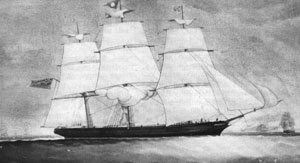 The one hundred and fiftieth anniversary of the sailing of the Mimosa is four years away. Jon Gower wrote a remarkable piece in Planet this spring on the layers of cultural interaction with Argentina. The story of the voyage was staged by Theatr Clwyd Cymru Theatre for Young People in July. It was received with acclaim by the Chair of the Wales Argentina Society’s Clwyd branch. Tim Baker has now guided the NYTW on an eighty minute devised piece on the same subject.
“Patagonia: Yr Hirdaith/ The Long Journey” is a visual and auditory tour de force. Dyfan Jones’ role as musical director takes in sound design and audio-visual. The Mimosa creaks its way across the seven thousand miles of ocean. The prospective Welsh colonists, a group of around thirty in number on stage, sing in beautiful harmony. As a desperate soul wanders to his death in the dust land of Patagonia three piano notes repeat themselves over and over. Ruth Hall’s design turns a pile of cases and bags into a ship’s deck. For the trek from the desolate coast to the Chubut valley the wasteland is brilliantly conveyed by a huge textured backcloth. The painting is by Jennifer Riddick. The lighting, a horrendous desert evocation, is by Nick Beadle. Earlier on, he has used low level lighting to cast the settlers’ faces in expressions of hope and perseverance against hardship and the journey’s rigours. Tim Baker’s staging is haunted by metaphor. He is a director not afraid to use silence. With the dropping of the wind the sails fall silent. Under the harsh just-South-of-Equator sun the passengers sprawl across the deck in a staging with intimations of Gericault to it. The arrival in the river valley is marked simply by a row of buckets. The cast do not just drink, but douse their heads. The scene has cadences of baptism on the arrival in their promised land. Structurally, the production divides in three. There is the tedium and the hostility of the wait on the Liverpool quayside, the landing on the South American shore. In between, the bulk of the action takes place aboard ship. Most of the cast are on stage throughout. Some company members are heading straight to the RWCMD’s acting degree. They will arrive with benefit of experience of working with practitioners of all the theatre arts, save one. The dramatist is absent. “Patagonia: Yr Hirdaith/The Long Journey” is a remarkable result of eighteen straight twelve hour days. But a script forged under these circumstances will have two results. It will not deliver a language of distinction. The singing is lovely but the rhymes are humdrum. “Bound” and “found”, “end” and “friend.” The script lacks unity. Some lines have a prosaic unhistoricality to them “No-one can tell us what to do. No-one can oppress us.” Others have a rhetorical quality. The voyage is “our escape from our haunted past.” It is a language that jars. This strand of theatre has its roots in Expressionism. Individual characterisation is minimal. The settlers are uniformly doughty, put upon. The greatest misdemeanour comes from one who breaks wind at night in the packed tight sleeping quarters. The production has a rhythm that is stately. History is contention. It is untidy, paradoxical. More often than not it sits uneasily with the imperative for artistic shaping. “Patagonia - Yr Hirdaith/The Long Journey” omits much context. The idea for a colony had been long going on before 1865. South Africa, Canada, Australia, USA, even Palestine had been considered, according to the chronicler of the Mimosa, Susan Wilkinson. The role of aristocratic help in facilitating the venture is left out. A passenger on the Mimosa, John Seth Jones, described the crossing of the Equator. According to his account sailors in fake beards drenched the Welsh. Rockets were fired. In translation: “Then many of the more respectable members went to have drinks with the captain in the cabin, and it is said that many of them were rather drunk.” On stage the travellers only dance on crossing the Equator, their virtue unimpaired. The company boldly issued their first night audience with Post-it notes that asked for comment. A wall of the Arts Centre was well-covered. Enthusiasm for the performers was universal. But, asked a writer “Where are the Indians?” A magnificent ending sequence blends Welsh dance with tango, severe nineteenth century dress with Argentinian. But, indeed, “where are the Indians?” The relationship with the indigenous Tehuelche is fascinating. It may well be unique. A leader of the venture, Lewis Jones, reportedly insisted to the Argentine government that the Indians be compensated for the land the Welsh had been given. Did it happen? The Tehuelche apparently taught the settlers the crucial skills to hunt. They may have been instrumental in saving the colony. It would have been nice to know more. |
Reviewed by: Adam Somerset |
This review has been read 2992 times There are 30 other reviews of productions with this title in our database:
|
