| In His Own Words- Michael Billington |
On Criticism & Critics |
| Michael Billington , In Interview with Mark Fisher , December 19, 2019 |
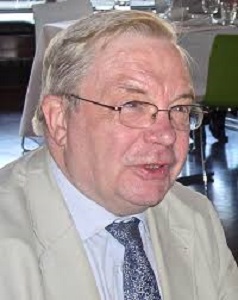 After 40-plus years as a critic and 8000-plus productions Michael Billington featured in an interview with Mark Fisher IN the journal “Critical Stages/Scènes critiques”, the IATC journal/Revue de l'AICT 2019: Issue No 20.
In extract: CRITICAL YOUTH “So, was I any good? I think I was quite earnest as a young critic. But I tried everything at Oxford; I tried directing and acting, and I wasn’t very good at either. But, when I was reviewing, I was sitting behind a desk in my room, in front of a portable Olivetti Lettera 22, and I felt at ease. I suddenly felt, “Gosh! I’m comfortable doing this. When I walk into a rehearsal room, I’m pensive, nervous—will I be able to choreograph the production? But when I’m at my desk, I feel a sense of personal equilibrium. Maybe that’s telling me something.” “I immersed myself in drama in my late teens. At Oxford, I was seeing plays and taking part in plays whenever I could. My theatrical education, though, began earlier than that, and it was to do with living near Stratford-upon-Avon, Birmingham and Coventry. Birmingham had a famous rep theatre, which, in those days, did the whole of world drama. Coventry, you saw showbiz spectaculars—and I loved comedians, music hall and variety. At Stratford, when I was 15, there was one of those golden seasons, when Laurence Olivier played Macbeth, Titus Andronicus and Malvolio. That was the single event that made me think I wanted to be somehow part of this theatrical world.” CULTURAL REFERENCE “You need a wide frame of cultural reference. The critics I admire are often those that do bring in political references, cultural references. As a critic, you need to know something about the cinema, music, visual arts . . . I was lucky because, in the 1970s and 1980s, I used to present a topical arts programme on Radio 4, Kaleidoscope, which meant I was constantly going to art exhibitions, seeing films and reading books. The BBC helped to widen my cultural education. I still have huge areas of ignorance, the most prominent being popular music. “One of the pleasures of being a critic is we’re always having to educate ourselves, and the job is never complete.” CULTURE AND SOCIETY “I would include in this politics as well. One of my fascinations is with post-war British politics. I wrote a book called State of the Nation which tried to link the theatre and politics. It started with a hunch, because I kept seeing plays that seemed to be about the state of Britain and I wondered if there was a link. I was staggered to go back to 1945 and find British writers had been writing nonstop about who we are as a nation. Theatre reflects the politics—and the politics, sometimes, nudges the theatre in certain directions. I’ve been preoccupied with that interaction.” ON THE DIFFICULTY OF RETIREMENT “The difficulty I have found is knowing when to get off the merry-go-round. This job is impossible to give up because there’s always something coming up next week or next month. As I look at the calendar for 2020, I think, “My God, there’s a new Tom Stoppard play! Oh my goodness, there’s a new production of Uncle Vanya in the West End! There’s a new play by Lucy Kirkwood! Am I not going to be able to review these?” By my own decision, I’m not. It’s a compulsive, addictive job, and it’s very difficult to break the addiction because you always need another shot. My life has been enriched by a succession of fantastic evenings in the theatre.” AT THE EDINBURGH FRINGE “This was 1960. It was my first trip to Edinburgh and the Festival, and I saw everything, plays, opera, ballet . . . I went to the Fringe, which, in those days, had about 35 shows, and you could see the bulk of them over a three-week span. I went to football—I had a fantastic time. “On my first night in Edinburgh, I went to see a production of The Seagull at 7 p.m., with a young actor called Tom Courtenay making his professional debut; then, at 10.30 p.m., on came this ramshackle revue, Beyond the Fringe, with a couple of people, Alan Bennett and Dudley Moore, I knew by reputation. Like everyone else, I was bedazzled.” ON DIRECTORS' THEATRE “Yes, there was a time when I was very high on the great European directors: Ingmar Bergman, Giorgio Strehler, Peter Stein and Peter Brook. Although they offered new visions of classical plays, those directors didn’t actually distort them or rewrite them. What we’re now moving into is a culture where directors, certainly in the U.K., feel free to rewrite a play from top to bottom. “For example, one of my bêtes noir, a production of The Wild Duck by Robert Icke, who admitted it was after Ibsen and not the strict text, but, at the same time, he rewrote it in ways that I thought were superfluous and nonsensical. It’s a play that needs no tinkering with, I think. Robert Icke symbolises to me the idea that the director is the supreme being. The great directors—and I’ve mentioned four of them—are interpreters of these plays. They don’t see themselves as imposing themselves on the plays. They are excavating the plays to find their true meaning.” CRITICISM AND THE ART OF THE ESSAY “One of the things that’s changed is that, when I was growing up, criticism was seen more as an essay; an essay that could take in lots of references. Criticism has become more utilitarian. It’s got to fulfil a function of guidance as to whether a show is worth seeing or not—star ratings are one aspect of this. Reviews are shorter and they’re much more to do with “is this show worth seeing or not worth seeing?” There is less room for digression, speculation and the essayistic approach. “The concept of the critic as artist has pretty much vanished. It’s a vain thing to say, of course, but I think we should still aspire to that. We are reviewing one art, but we are trying to create another one.” Abridged, with thanks and acknowledgement, from the full interview which can be read at: https://www.critical-stages.org/20/with-age-i-get-more-tolerant-of-failure-interview-with-michael-billington/ |
Reviewed by: Adam Somerset |
This review has been read 161 times There are 39 other reviews of productions with this title in our database:
|
