| Enlightening Insights into Writing, Theatre and Television |
Theatre Event |
| Cyfrwng , Wallace Building, Swansea University , July 14, 2012 |
 Come July and theatre gives up touring for a couple of months. In its place unfurls a season of festivals, outdoor performance, and conferences. The second day of Cyfrwng’s seventh conference is characteristic of this summer of historical wetness. A blue sky over Carmarthenshire turns to thin, insistent rain over Swansea. Organisers like the National Botanic Garden for its big International Day of Dance are devising wet or dry scenarios. For Cyfrwng’s conference, taking place within Swansea’s solid Wallace Building, the weather is forgotten. But water features hauntingly in the day’s second session.
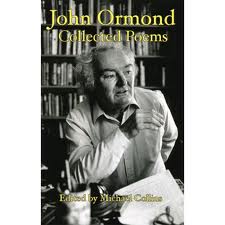
 For “Poets and Authors of the Screen” Kieron Smith shows some tantalisingly brief clips from a John Ormond 1960’s documentary for the BBC. The subject is sailor Val Howells and the film style is unhurried and meditative. Smith places Ormond’s work firmly in its setting of a tradition deriving from John Grierson and Humphrey Jennings. Smith deftly switches between video clips and samples of the poetry. He starts with a nice quotation from John Ormond. It runs on the lines that if ever the job (i.e. the BBC) threatens the work (i.e. the poetry) the former will have to go. Smith puts up on the screen some scintillating selections from the verse. From a poem on Dyfed: “an indecision of lanes resolves/ This land into gestures of beckoning ” and the artist “living, if you like, on the horizon of himself.” These documentary snippets are pieces of history. John Drummond records in his autobiography “Tainted by Experience” a time that is now inconceivable. Television ownership in the sixties is expanding so fast that the BBC finds itself flooded with licence revenue. Ken Russell’s majestic documentaries are done on the basis of shocking budgetary indiscipline. John Geraint, from Green Bay, is present to show his work on screening Dylan Thomas. He mentions as an aside that documentary budgets have probably dropped by a third in the last three years. Best not to be tempted to look back to a golden age, advises veteran producer Colin Thomas. Reality schlock and buying houses may loom large- (on the first day of Cyfrwng’s conference the BBC has reached a new high in drooling over a house on the Cleddau estuary.) But this month has seen an eighty-minute documentary on Gareth Jones, with original research, and the current “Secret History of Our Streets” has the admiration of the professionals. Back with Kieron Smith his work is drawn from a PhD two-thirds in the making. It is the nature of doctorates that the bulk serves as valuable fill-in pieces of knowledge. A minority have a subject matter big enough to warrant being turned into a book. Alexandra Harris’ “Romantic Moderns” is a fine recent model. John Ormond is a unique figure and editors from the University of Wales Press could make a useful visit to Swansea’s Centre for English Literature and Language of Wales. Smith touches lightly on Wittgenstein as intellectual context to the Ormond films. Wittgenstein’s most common quotation is taken up in the conversation. There is no Wittgenstein in the afternoon session, and no Lacan or Lebord either. Two makers talk about making. Ed Thomas and Dafydd James, in conversation with Rhodri Davies from Tinopolis, articulate the challenges, both cultural and internal, of making drama. “In Wales there is no collective mythology” says Thomas “which makes it very difficult for a dramatist.” It is an insight, which means that a Miller or Edgar theatre of fundamental cultural critique is elusive. On the other hand it is not an impediment to theatre. The most gripping piece to visit Wales so far in 2012 has been about one man losing his sight. Dafydd James brings news of the latest manifestation of “Llwyth.” Its appearance in Taiwan is in mandarin with surtitles in Japanese and English. The two playwrights discuss their exploration in its adaptation for screen. The form will be different with scope for parts of the characters’ back stories. Thomas and James may be a generation apart in age but they share common aspects of artistic experience. For James the school pupil it was the big world, Tennessee Williams, rather than writers of Wales who hit the formative writer. Even after a period of absence in Edinburgh and London he confesses that he was “struggling to know what to write about.” The Sherman provides the key to unlocking the author’s commitment to write in Welsh. It is a small magic sentence that causes the audience to chuckle: “We’ll give you a small bursary.” The Thomas-James session is an easy, eloquent hour on writing and culture, art and its making. The commentary is uninhibited and personal. From Thomas: “There’s a stranglehold of mediocrity here in Wales.” Dafydd James gives an unusual piece of advice to the aspiring writer: “Make a mess first, throw out the mess and you may end up with a structure”. Opportunities for artists to speak and to share are not many. Cyfrwng provides such an opportunity. Their conference has thirteen sponsoring bodies, too many to list, from all corners of Wales. Their confidence has been well-placed. |
Reviewed by: Adam Somerset |
This review has been read 2840 times There are 25 other reviews of productions with this title in our database:
|
