| A Great Critic of Television Despite Himself |
A Writer Remembered |
| A A Gill Remembered , Culture of Criticism , December 15, 2016 |
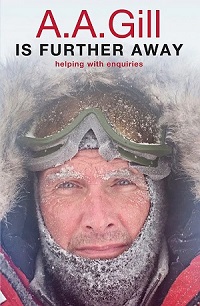 The media's most famous petrolhead once wrote he could not care less about the level or nature of the particulates exuded by his lumps of chrome and aluminium. Thus spoke public school England about the bronchial disease imposed upon the children of families unable to afford the delights of the Cotswold life that he enjoyed.
 AA Gill (1954-2016) liked to hang out with the car-man and a similar air of tabloid disingenuousness pervaded the writing. The carapace of assumed Scottishness felt fake. The piety towards the old was hopelessly unrealistic. The tendency towards misogyny was perhaps, like the lung disease perpetrated upon the disadvantaged, just a bit of a laugh. He was a fool on the subject of Wales. But then the nations of the disunited kingdom are all a bit of a laugh among the party-going chums who command the media. General Melchett was given an asinine line on Wales in the “Bob” episode of “Blackadder.” It is still a classic of comedy. Just so was A A Gill a critic of seriousness. It is true that the posture of jester was overdone, true also that the prose had too much flash to it, often to its detriment. But when critical writing was called for Gill melded linguistic attack with moral seriousness and personal fervour. As a travel journalist his occasional reports from Africa were fired by reaction to the monoculture image-making of the likes of “Lord of War” and “Blood Diamond.” His own reports were invariably lucid in description, balanced in description and deep in empathy. The writings on Africa, and the other trips away from the small screen, fill the books of essays. But it is television where he held centre stage. He knew television and loved it through and through. There cannot be no praise without its opposite. Gill skewered the patchiness of documentaries- the producers with no confidence in the intrinsic interest of their subject, the hiring of know-nothing celebrities who are an embarrassment to watch, the substitution of antics and musical excess for a proper script and presentation. When a posturing but photogenic presenter claimed to have rediscovered Nash and Bomberg it was nonsense, and he said so. But when a documentary did it well he said so too. Of the “Art of Germany” “this was Graham-Dixon doing what he is best at, which is thoughtful and unflashy interpretation and enlightenment, based on solid art history. He is a careful critic. Nobody is better in a room full of pictures. He doesn’t tell you what you can see, but why you are seeing it and how it fits in with all the other things you will see.” When it came to television's drama he was bored by Poliakoff and sceptical about Potter. He wrote the first and the last words on the hybrid futility of the drama-documentary. “Let's get an actor to explain it and begin with the obligatory disclaimer that everything we’re about to see is based on fact, that some of it never happened, some of it didn’t happen when we said it happened and some of it is probably complete fantasy. Equally depressing is that this is what drama departments think they should be spending resources on: biopics, docudramas and re-creations. Almost all the rare standalone plays made for television are re-creations of events or impressions of the living or recently dead. Occasionally, they’re marvellous. Mostly, they’re not. Mostly, they’re lazy, predictable and simplistic, relying on what the audience already knows for their dramatic effect. “ He loved “Borgen” and reflected on why Britain could never do it. “I have wondered before why it is that British telly can’t make a serious drama about politics. It can only mock and sneer. “The Thick of It” and “Yes Minister” were funny and successful, but our inability to come up with a Brit “West Wing” is symptomatic of a constant adolescent cynicism.” His subject was another drama-documentary, the programme under discussion “noticeably badly crafted, palsied with camera wobble and coarse editing, thick and effortful from start to finish, an embarrassing piece of drudgery.” BBC4 gave up on drama before it had even started on a note of high self-congratulation for a string of prurient celebrity bio-pics. Gill was right on the budgeting: “drama needs to become both more and less parsimonious about its productions; less authentic and obsessively realist, with less set- and actor-dressing, and more space given to scripts and good projects. The runs of British dramas are almost always too short, so the plots are squeezed into gaudy boxes of costumes and National Trust furniture. “ A decent critic has respect for history. It is part of the patronising of the young that history has to be rendered “relevant” by the over-fifties commissars of culture. When he saw “Band of Brothers” he saw dramatic evasion: “Like most war epics, it staggers under the weight of its own logistics and responsibilities. The human story, their drama, is chopped up into stern-jawed truisms and moments of high bathos. The thing that first struck me about “Band of Brothers” is that everyone is too old and too clean, and their hair’s too nice... its greatest failing, for all the special effects excitement, is a emotional emptiness...at its heart its hygienically vacant. Feelings, like wars, are messy and chaotic. In “Band of Brothers”, they come vacuum-packed and colour-coded. This is blood without pain, tears without snot.” He loved to taunt those he called the Tristrams but it was not just the BBC. When ITV dramatised Kipling and the loss of his son Jack in war it was headed“A Remembrance Day Disservice.” “A woefully underwritten script” he wrote “played Kipling as a simple, childlike old duffer, awash with wholesome romance and naive patriotism – which is far less than a fraction of the truth about this complicated, immensely energetic, accomplished and inspiring man. His wife and daughter were written as completely modern figures who had modern feelings and put them in modern terms. It was altogether an annoyingly glib and shallow portrayal, seen with perfect hindsight. The truth was far more poignant and would have made a much better, if more complex, drama...It is only with the smugness of looking back that you can see Jack Kipling’s death as ironic comeuppance for the patriotism of Rudyard. Nobody in 1914 foresaw the breadth and depth of the calamity, or the fathomless lake of grief the war would dig.” News has had a mighty buffeting in 2016. Gill saw “a fundamental weakness in broadcast news. It’s long on Autocue readers, staffed with freelance opinion-mongers and special-interest pleaders, but ridiculously short on journalists or researchers, relying instead on other media or press officers and PRs to furnish stories, which it then examines by hauling in two blokes who disagree to disagree for five minutes. This isn’t a partisan crow on behalf of newsprint — papers equally rely on television for soft features and human interest — but a real concern with the breadth, focus, nerve and stamina in hard-news broadcasting.” Gill was a fool on Wales and much else. But where it mattered he was passionate for his discipline. “Varied and lively criticism isn’t necessarily good for individual productions or artists” he wrote “but it is good for the genre as a whole. If there is no intellectual, aesthetic political, spiritual passionate argument about what gets made, then the only arbiters of value are the box office and the phone-in. Bad culture drives out good unless there is someone there to stop it.” Anthony Adrian Gill 28th June 1954- 10th December 2016 |
Reviewed by: Adam Somerset |
This review has been read 574 times There are 19 other reviews of productions with this title in our database:
|
