| “Write from the place of exposure" |
A Writer Remembered |
| Anthony Minghella , Theatre, Cinema, Opera , July 15, 2016 |
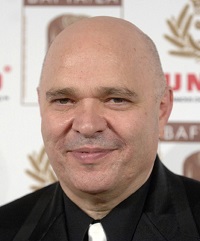 On 5th July I made a visit to the Coliseum in St Martin’s Lane. It was the last step in a journey of almost 40 years, to see Anthony Minghella in opera The artistic voyage of Anthony Minghella was unique. No writer encompassed radio, television, stage and film in the same way. To move also to director of film and opera doubled the accomplishment.
 My seeing his “Madam Butterfly” was in the same year that “the English Patient” was revisited in the press. 2016 was the film's twentieth anniversary. My notes for the day after the opera read: “The Coliseum has a globe that shines by night. The inside is not so bright. The company that occupies it is riven. The Arts Council of England has chided it. High-level resignations have been followed by a close call with industrial action. Clear blue water used to exist between here and Covent Garden in terms of distinctiveness of brand, repertoire and pricing. The Coliseum is now empty and silent for a lot of the year and dependent on past successes. This “Madam Butterfly” is one, revived from eleven years ago for nine performances. “It is not the music or the singers that have brought me here. For the first time it has been the name of the director. Anthony Minghella was fourteen months younger than I. The period of his career in which he was a writer for theatre was that in which I was a spectator of theatre. I saw three of the four plays for stage, heard the radio play “Cigarettes and Chocolate” and read the one book that came out under his name. I have seen six of the films. The film that he directed in the USA but did not write he ascribed as part of an apprenticeship in the film industry. This year is the twentieth anniversary since the release of “the English Patient” . To see Minghella directing Puccini is a completion of the circle. “Minghella's own aesthetic values are summarised across his published interviews. “Madam Butterfly” is a seamless extension across media of the distinct voice that coursed through the other work. He wrote to a background of Bach, his attention on making images of richness. The opera is high in shades of colour and balletic in concept. His life-long partner was a choreographer. “It is emphatic in its emotionality. Butterfly’s son is performed by a puppet manipulated by two ninja-type figures in the shadows. The mimicry of a child’s facial movement is spot-on accurate. The emotion achieved is greater than that when a real child performs. When Butterfly faces her abandonment the puppet-child hand raises with deep pathos a little stars and stripes flag. Butterfly’s death is marked by two long strands of red cloth that snake out across the tilted stage. Minghella has used this visual motif before. Christina Scott Thomas as Katherine Clifton in “the English Patient” wore a long strand of white scarf as her character approached death. “As a writer for theatre Minghella made a rapid jump from mid-size theatre to a West End venue with “Made in Bangkok” in 1986. His preference as a writer was for the properties of film that are unique for the medium. “The English Patient” has one of film's great opening sequences. A human neck merges into the folds and ripples of the Sahara desert shot from a low-flying aerial camera. The story's ambiguous hero is trussed up like a mummy for carriage on a camel's back. It is a technique that runs throughout the film at the hands of its director and editor. It is a film set in the Second World War but is not like any other wartime film. It juxtaposes moments of lyricism with war's reality. The camera looks up to the desert stars and the scene swiftly changes to a sand storm that obscures them and threatens the small humans below. “Film is so adroit at adroit at flexing between situating people between public landscape and situating them in a private world” said the director “The theatre is always confounded by that grammar.” “Minghella in person had a metaphor for writing. He drew a circle in the air with his forefinger. His invisible circle was a metre in diameter. “That is a circle” he said. The same forefinger traced a series of dots of the same circumference in the air. “That too is a circle. Writing is about cutting it all out until you have the dots. But the dots still make the circle.” “The English Patient” breaks every rule of the guides on how to make a screenplay. “One of those guys who goes round “teaching” people how to write a screenplay actually uses “the English Patient” as an illustration of how not to” he said with a certain satisfaction. “The dual action in North Africa and mid-Italy follows the counterpoint of Bach. Bach is in the words as well as the texture. A geographer mentions Bach in the script and the nurse Hanna approaches a piano that is booby-trapped. The first version of the screenplay had a third setting, as much as thirty minutes of film time, in England. Its subject was the garden with the view of the sea which is the home of which Katherine speaks. It had a symbol of a tree that must be cut. The whole part of the schema was cut. “Hacking back to the dots was not just intended as advice for aspirant writers; it was his method. The dialogue has a taut compression to it. Ironically the quality of compression allows the script to bring in references to Herodotus, Gyges and Candalus and Anna Karenina. But Geoffrey is pinpointed in a few words. “It's a present from Katherine's parents” he says of a biplane.“We're calling it Rupert Bear.” Of his injuries Almasy says “I'm a bit of toast, my friend.” In his last days he says “I long for the rain on my face.” * * * * I was once in the home of Anthony Minghella. At the time, in 1984, his home was in a converted chapel in north London. The conversion of the chapel to housing had been imaginative but it was strange to sit in conversation juxtaposed with a truncated lancet window. The reason for our meeting was writing. He was hugely encouraging, drawing out the better parts of my efforts with sympathy and acuity. At the time he was poised between radio and television, theatre being left behind. I had that season seen the play “A Little Like Drowning”, his artistic coming-to-terms with the Italian heritage. My being there had its roots in an earlier time of his life. In Hull in 1978, on a Sunday night, my host said: “Some friends of mine are performing tonight. They're doing “Dusa, Fish, Stas and Vi.” This was good. “Dusa, Fish, Stas and Vi” had been a big hit in 1976 and was a key feminist play. “And they're doing a play by one of our lecturers.” This was not so good. It is always salutary to be wrong. “Whale Music” had a cast that comprised four women. Its sympathies were acute. It eventually became a BBC film production in 1983 where the cast had expanded to nine women. As a result of that night a few years on I attended a writing course and chose Anthony Minghella for tutor. From my notes of an exhilarating five days in spring at Lumb Bank: “Minghella- ten commandments “context-complications- volition (who wants what- point of entry- set-ups and contradictions- how characters meet-dramatic dynamics- hidden agendas- secrets and subtexts-relationship between ideas and incident. On research “The world has to be real for you. Go to this place yourself. Be in that world.” On the self “Write from the place of exposure/ ask yourself exactly why you are writing? And the essence of writing for acting: “The action follows a course A-B; what you are writing are the obstacles Anthony Minghella: January 6th 1954- 18th March 2008 |
Reviewed by: Adam Somerset |
This review has been read 570 times There are 19 other reviews of productions with this title in our database:
|
