| My Neighbour is my other Self, othered by Space |
Places |
| Samuel Taylor Coleridge , Travelling in Wales , July 1, 2016 |
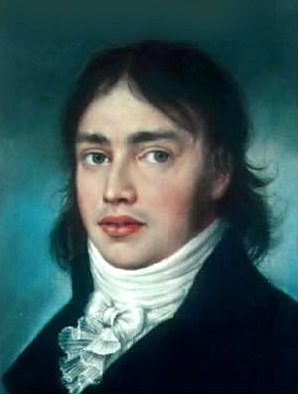 The Coleridge in Wales Festival stopped in Machynlleth June 18th. Richard Parry fires off names and references at speed. Herder, Goethe and Schelling in Germany are prefigured by the Platonists of Cambridge. But, says Parry, the likes of Henry More and Ralph Cudworth are now half-forgotten.
Coleridge was steeped in the Idealism of Schelling. But before he was in Germany he was here. He and Wordsworth reinvented poetry with their collaboration “Lyrical Ballads” but four years previously, in 1794, he was here in Machynlleth. Leaving Cambridge University he set off on a walking tour of Wales. In a place that was little visited he conceived a utopian concept of “pantisocracy”, a government by all and for all. His idea was an egalitarian community on the banks of the Susquehanna river in Pennsylvania. His friend Robert Southey cast doubt over the project’s viability. Not for nothing is the first volume of the latest biography given the title “Coleridge. Early Visions”. Coleridge had nightmares of a vividness as to wake whole households with the screaming that they induced. He was ever fascinated by the half-sleep and half-awake condition. His reading was omnivorous. He read Cato on liberty and necessity and discovered Voltaire's “Philosophical Dictionary”. When he announced that he was a philosophical sceptic a teacher retorted “So, sirrah, you are an infidel, are you? then I'll flog your infidelity out of you.” On reading Euclid he lamented the limits of rationality: “though Reason is feasted, Imagination is starved: whilst Reason is luxuriating in its proper Paradise, Imagination is wearily travelling over a dreary desert.” He made an attempt of folly to join the army under the assumed name of Silas Tomkin Comberbache. He was a poor rider being thrown off his horse three times in a week. He griped of his saddle sores and the “dreadfully troublesome eruptions, which so grimly constellated my Posteriors”. The Regimental Master Roll eventually recorded “discharged S T Comberbache, Insane: 10 April, 1794.” And Coleridge walked. On his first walk in 1794 he covered five hundred miles in a month, a journey that took in Gloucester, Anglesey and back to Bristol. Revolution was rampant abroad and Coleridge read every pamphlet put out by the Jacobins of Britain. Looking back from the perspective of 1809 on that incendiary time he wrote “My feelings, however, and imagination did not remain unkindled in the general conflagration...I was a sharer in the general vortex, though my little World described the path of Revolution in an orbit of its own.” In Bala he came close to a fight when he proposed a toast to George Washington in the company of a local Justice of the Peace and parson. One of Bala's worthies came out with a riposte. “I gives a sentiment, Gemmen! May all Republicans be gullotined!” The ferment of the mind was as great as the disorder of the personal life and the grievances of the body. In January 1801 he was suffering from rheumatic fevers, swollen leg joints, nephritic pains, and a swollen testicle. The surgeon-apothecary treated him with leeches, poultices, vinegar fomentations, sal ammoniac rubs, bark infusions, brimstone and Kendal Black Drop, to which was added opium heavily laced with brandy. All the time he was reading Giordano Bruno, Hobbes, Locke and Kant. When he told Wordsworth the “intensity of thought” made him feverish and sleepless his friend advised him to stop. Travel was regular. His notebooks record his reactions to St Clears, Laugharne and Creselly as they do to Rome. He looks at Michelangelo's “Moses” in the company of two elegant French officers. The French are deficient in faculty of association, he notes. The French cannot do literary criticism in the way of the Germans or naval strategy in the way of the British. The French see everything in parts, the fluidity and the wholeness of phenomena are beyond them. Coleridge is consumed by attention to the inner world. Of Bernini's statues outside St Peter's he sees “a great genius bewildered- and lost by an excess of fancy over imagination.” He finds Kant's Categorical Imperative lacking. “Mere knowledge of the right, we find by experience, does not suffice to ensure the performance of the Right- for mankind in general.” His speculations are those of poet rather than thesis-writer. “My Neighbour is my other Self, othered by Space” he writes “my old age is to my youth and mother Self, othered by Time.” The gap between thought and action is a constant concern, the bridge between “mere conviction and resolve” and “suitable action”. He locates the link in a conventional solution. “This medium is found in Prayer and religious Intercommunion between Man and his Maker.- Hence the necessity of prayer.” He makes the arc from Locke and Hartley to a religious view of the world. He never departed from his fundamental Platonism but admitted, "All these poetico-philosophical Arguments strike and shatter themselves into froth against that stubborn rock, the fact of Consciousness, or rather its dependence on the body.” |
Reviewed by: Adam Somerset |
This review has been read 569 times There are 41 other reviews of productions with this title in our database:
|
