| A Traveller in the Company of Those Gone Before |
Places |
| In the Steps of George Borrow , Machynlleth to Dinas Mawddwy , November 1, 2019 |
 At the Wynnstay Arms in Machynlleth; a traveller may be alone but there is always the company of others. Each place of visit follows the path of others who have gone before. George Borrow, the author of “Wild Wales”, walked the same high street 160 years ago and he too stayed at the Wynnstay Arms.
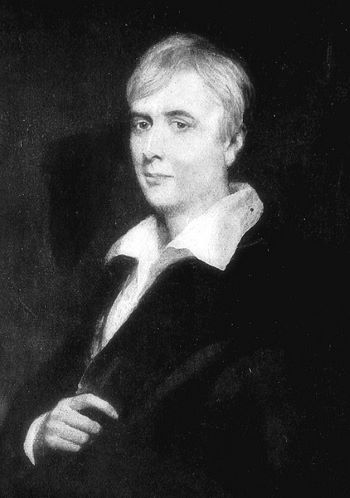
 Borrow liked what he saw around. “For many miles the country is not mountainous, but presents a pleasant variety of hill and dale.” The road is now sleek tarmac but his descriptions are still broadly true. At Mallwyd the landscape shifts. The cover of green shrinks and lines of rock protrude. “Mallwyd village is overhung on the north by the mountains of the Arran range, from which it is separated by the murmuring Dyfi” wrote Borrow. Just as an older geology reveals itself so too the village of Dinas Mawddwy reveals its layers of history. It location is inevitable being at the confluence of three rivers. Afon Cywarch arrives from the north, Afon Cerist from the west and both join the Dyfi. As elsewhere this was a place of slate with quarries at Minllyn and Aberangell. The railway to serve them was opened a decade after Borrow passed through in 1867. It closed in 1951 and the the track was removed the next year. Its imprint is unmistakable, the site of Meirion Mill retaining its station building and large goods yard. If some economic activity rises and subsides others remain constant. The inn, the Llew Coch, goes back to the twelfth century. I rest my pint on a table of rippled wood. The oak, I am told, is five hundred years old. George Borrow was not at ease when he was here. “At Dinas Mawddwy I stood single. The people eyed me as a phenomenon, with countenances mixed with fear and inquiry. Perhaps they took me for an inspector of taxes.” I am not taken for an inspector of taxes and I do not stand single. A pair of smokers outside the pub are happy for fresh company. The eye of a stranger does not see beyond surface. One of the smokers points my eye to the hill that looms to the north. He guides me to the top of a mast that is hidden in a sea of trees. The village was long beyond the reach of a television signal. Unusually Dinas Mawddwy retains common land. Traditionally it was, and is, a place where all may graze their livestock. A community-minded villager built his own mast on the common land and ran a co-axial cable down the hill. The hill is not just provider of television. Over its crest a mountain lake provides water. If he turns a tap on full, says my smoker-companion, the pressure is so great the water bounces straight upward. The passage of upland Wales from industry to place of leisure was not instant. But the village was soon confident in its attractions. Its guide book for 1893 declared “enjoy mountain walks and mountain air; eat Welsh mutton, fresh butter and newly laid eggs; and drink fresh milk without running the risk of imbibing chalk and water in mistake”. But it took an earlier generation of visitors to make the cultural shift, to get past gloom and wet to freshness of air and food. Coleridge was here but he did not linger. He took the road on to Bala where he inflamed local sensitivities with his leaning towards the new republics of his time. He proposed a toast to George Washington in the company of a local Justice of the Peace and parson. A Bala worthy came out with his own toast. “I gives a sentiment, Gemmen! May all Republicans be guillotined!” George Borrow was a pioneer in creating the picturesque. He took to walking in the 1820s, covering miles by the thousand in France, Spain, Portugal, Morocco, Russia. He was over six feet in height, his usual dress black cloth suit and white stockings. His acquaintance with languages was vast; twelve by the age of eighteen and familiarity with two dozen more. To Nahuatl, Tibetan, Armenian and Malo-Russian he added Welsh. He came to this region at the age of 59. “I passed a village with a stupendous mountain just behind it to the north” was his view from outside Dinas Mawddwy. “Scenery of the wildest and most picturesque description was rife and plentiful to a degree: hills were here, hills were there; some tall and sharp, others huge and humpy; hills were on every side; only a slight opening to the west seemed to present itself.” |
Reviewed by: Adam Somerset |
This review has been read 294 times There are 41 other reviews of productions with this title in our database:
|
