| Nobel Prize-Winning Scientist's Insights on Art & Mind |
Art & the Senses: Body & Mind |
| Erich R Kandel- Essays on Art and Science , Columbia University Press , May 5, 2026 |
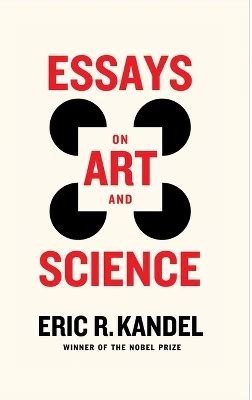 Eric Kandel won the Nobel Prize in Medicine in 2000. Although his career was in New York and Harvard he was born, 7th November 1929, in Vienna. His family, owners of a toy shop, left after the Anschluss.
 Kandel studied history and literature at Harvard; his undergraduate thesis was on Carl Zuckmayer, Hans Carossa, and Ernst Jünger. He came under the influence of the work of B. F. Skinner and became interested in learning and memory. He differed from Skinnerian behaviourism in linking psychology to biology, in particular to neurology. His meeting Anna Kris, whose parents Ernst Kris and Marianne Rie were psychoanalysts from Sigmund Freud's Vienna-based circle, sparked his interest in the biology of motivation and unconscious and conscious memory. He had already written on the links between arts and science. His “Reductionism in Art and Brain Science: Bridging the Two Cultures” was published in 2016 and this later collection of essays returns him to the same theme and, in particular, to the art of his childhood Vienna. Kandel refers more than once to Alois Riegl. Riegl had initiated the bringing together of art and science, during his time as professor and leader of the Vienna School of Art History in the 1890's. It was Vienna, a crucible of modernity, which was the first to use the insights of pathology to develop a rational and objective method of diagnosis. The merging of science and the arts were exemplified in Arthur Schnitzler. Not only was he the author of classic plays and short stories he was also was a doctor. He was qualified enough to be able to write an attack on Freud's case study of his patient Dora. He put his critique of Freud's lack of insight into women into his novella “Fraulein Elsa.” Kandel's essay “Interaction of Christians and Jews in Vienna 1900” follows a line from Schnitzler to Klimt to Empson, Helmholtz and Gombrich. Gombrich dispelled the idea of “an innocent eye.” “We cannot perceive what we cannot classify, he argued.” In analysing the portraits of Chaim Soutine Kandel refers to the “peak shift principle” of Vilanayur Ramachandran, a cognitive psychologist. In this theory an artist seeks to capture the essence of a person; an exaggeration is used to trigger the same neural mechanisms as would be done by an encounter with the subject in real life. Modern brain science reveals that cortical areas thought to be specialised for visual information can be activated by touch. The lateral occipital complex is a region that responds to both the sight and touch of an object. So Soutine's paintings provoke processing in a multisensory representation. The locations are the fusiform gyrus and collateral sulcus. These higher regions are for perceptions of texture, “central to Soutine's paintings...intimately tied to visual discrimination.” “Indeed cross-modal association is key to the brain's experience of art.” “Powerful emotions are...recruited in our brain by Soutine's torturous, asymmetrical and existential images.” “The sculptural quality of Soutine's paintings actually gives us an experience of touch., and this interacts with our visual sensibility.” “The striate cortex which is the first visual processing relay in the cerebral cortex, projects to the posterior and anterior temporal cortex, where faces are represented.” Many of these areas are connected reciprocally with the amygdala. But much remains to be understood. “How these higher-order processes interact to create the totality of the beholder's share of a Soutine painting is one of the great challenges confronting brain science in the twenty-first century.” Kandel refers to the inverse optics problem. The two-dimensional image projected onto our retina can never directly specify all three dimensions of an object. Edward Adelson “asked how we are able to respond so successfully to the real world if our perceptions are illusory constructs.” Gombrich returns to George Berkeley and “the world as we see it is a construct slowly built up by every one of us in years of experimentation.” Kandel looks to abstract art and Construal-Level Theory, from Simon Lacey and Krish Sarthian. It is not an easy theory but is based on the premise that mental representations of objects are flexible and context-dependent. “Abstract art forces viewers to supply information from their own experience” concludes Kandel. “Thus, art representing an object by its concrete, specific, contextual features involves lower, or less abstract, construal, while art representing that object by its essential, decontextualised components involves higher, or more, abstract construal.” Kandel's essays are a valuable addition to the field, both concise and enriching. It also contains 90 illustrations of a quality to be expected from a university publisher. They include four pictures by Arnold Schoenberg from 1910, owned by the family and not to be seen often in a public setting. |
Reviewed by: Adam Somerset |
This review has been read 61 times There are 12 other reviews of productions with this title in our database:
|
