| A Look-back and Guide to 16 Reviews |
Art & the Senses: Body & Mind |
| Mind, Emotion, Attention, Salience, Health , Neuroscience & Neuro-aesthetics , August 16, 2026 |
 This sequence spreads across books, art, acting, music and summaries of research on art, performance, the senses and cognition.
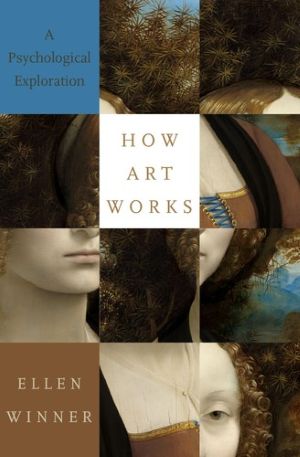
 17 August 2026: Mihaly Czikszentmihalyi- The Psychology of Happiness “Intentions are the force that keep information in consciousness ordered.” From this he looks to those who diverge from the norms of intentionality: heroes, saints, sages, artists, poets, criminals. "He places culture as a locus for creating psychic order. “There is much knowledge- or well-ordered information- accumulated in culture...Great music, architecture, art, poetry, drama, dance, philosophy and religion are there for anyone to see as examples of how harmony can be imposed on chaos.” "In a testament to the power of stories he finds that those who have failed to secure goals for themselves tend not to remember being told or having read to them stories by their parents in childhood." * * * * 3 August 2026: Arthur Koestler- The Act of Creation. Infinite scrolling. Popcorn brain. Artificial intelligence art. * * * * 29 June 2026: Susan Magsamen & Ivy Ross- Your Brain on Art: How the Arts Transform Us “The trifecta of cognitive processing are attention, learning, memory. “You can't learn if you don't pay attention and you can't remember if you don't learn.” * * * * 15 June 2026: Erich R Kandel- Essays on Art and Science “So Soutine's paintings provoke processing in a multisensory representation. The locations are the fusiform gyrus and collateral sulcus. These higher regions are for perceptions of texture, “central to Soutine's paintings...intimately tied to visual discrimination.” “Indeed cross-modal association is key to the brain's experience of art.” “Powerful emotions are...recruited in our brain by Soutine's torturous, asymmetrical and existential images.” “The sculptural quality of Soutine's paintings actually gives us an experience of touch., and this interacts with our visual sensibility.” * * * * 29 May 2026: Frank Barron “Creative people have a high level of intuition. “So our finding was that intuition, linked with some degree of introversion, was related to creativity”. “Creative people have a preference for complexity. “Creative subjects, sought to find a way to take something quite complex and, in it, find a simple order. “Their universe is thus more complex, and in addition, they usually lead more complex lives, seeking tension in the interest of the pleasure they obtain upon its discharge” “Creative people like things messy, disordered, ambiguous, and asymmetric but they also have a strong motivation to bring order and definition to the world.” * * * * 11 May 2026 Ellen Winner-How Art Works “Art is a socially constructed concept created by culture. Because it is socially constructed, it is not mind-independent. It is our minds that pull together into one category we call art. “ “Moreover art is a socially constructed concept with very blurry boundaries. And what counts as art can change over time and over culture.” “...Emotional saturation. “Artworks are emotional, as is the experience of perceiving these works. The representational content of a work provokes emotions in us, such as sorrow at a sad scene in a painting. Direct pleasure. “Art causes immediate pleasure for its own sake, with no utilitarian value.” * * * * 4 May 2026 Ellen Winner-How Art Works “Developmental psychologist Eleanor Brown worked with disadvantaged children at a Head Start pre-school who had a daily 45-minute arts enrichment session. It spanned music, dance and visual art. Saliva tests before and after showed a lowering of cortisol levels. “Among adults facing medical procedures- a cause for raised stress- reduced levels of anxiety were observed in those who played the piano, modelled clay figurines or did calligraphy. “Taking part in drama had a result in enhanced control over personal emotions. “Pretend” emotions were transferred to use in non-pretend situations. “Goldstein and Lerner cite much evidence that gaining control over one's personal distress is associated with the ability to respond more appropriately to another person's needs.” “A study looked at electrical activity in the brain. “Making an oil pastel painting for 20 minutes increased electrical activity in the brain consistent with lower cortical arousal, relaxation and self-regulation.” “Jennifer Drake, a former doctoral student of Ellen Winner, did repeated studies of children and drawing. “The simple act of drawing improves mood in children.” * * * * 27 April 2026 Impact of the Arts on Health & Healthcare Services in Wales at Bangor University “The estimated financial value of health and productivity benefits through all arts engagement in Wales (including but not limited to ACW activity) is at least £588m a year. “We estimate ACW’s investment in multi-year funded Organisations generates a financial ROI of £11.08 in for every £1 invested in terms of health, wellbeing and productivity benefits. * * * * 13 April 2026 Seven Effects of Music Across the Brain “A meta-analysis from 2021 also found an association between music practice and reduced risk of developing dementia. Whether these findings arise because musical brains are more resilient or because those without dementia keep playing for longer is a knotty question that future studies will need to unpick. “In 2025 an observational study of 10,000 cognitively sound over-70s found that regular listeners to music had a 39% lower relative risk of cognitive decline. Proof of a causal relationship, however, remains elusive.” * * * * 16 March 2026 How Reading Made Us “It took two thousand years to move from hieroglyphs in Sumerian to an alphabet. Our children are given two thousand days to come up with the same basic epiphany that moved from symbol to alphabet...The epiphany between what is seen and what is known as a word and a concept. “The first basic is when you have put four of those areas together: motor, vision, language and cognition.. There is time to think about what you are reading and with that there is time to feel. “The connection between the book, the human voice, the child and the growing system for understanding language, for making a connection between a book and language and always with the effect, if you will, of affection. “You are embedding the affection...By the time they reach your brain what you have is an extraordinary panoply of network connections...It is one of the most beautiful sights of activation....You are a walking activation map when you reach these deeper stages of reading. “Over time as reading changes we change with it. Human development changes with reading. Reading changes thought. Thought is changed by writing. Writing is changed by reading. The more we read the more that circuit develops, the more complicated and sophisticated our thoughts and our feelings grow over time. “That is what Proust said was at the heart of reading. We go beyond the wisdom of the author to discover our own. At the heart of reading is this centre, this place of interiority in which we think our own best thoughts.” Marriott: “Reading is itself a creative act. To lose reading is to lose a whole way of thinking.” * * * * 23 February 2026 Daisy Fancourt- Art Cure “In the case of visual arts a first impression takes 0.3 seconds and a deeper appreciation 0.6 seconds. This fits with Marr's Theory of perception. But an emotional response takes 3-4 seconds. And appreciation, for it be meaningful takes minutes, not seconds. “These facts of human physiology and cognition are not congruent with culture in its newest and dominant form, the algorithmically curated short form. “The higher the discomfort in the tension phase, the higher the pleasure when we finally get our pleasure. We can feel this clearly in “drops” in dance music or in twists and turns in detective novels when we keep thinking we've solved the murder only to discover a new fact that throws everything up in the air again.” * * * * 16 February 2026 Daisy Fancourt- Art Cure “The first has the heading “Regions of the brain activated by music.” Eight brain areas are identified. In the lower brain the nucleus accumbens and amygdala govern the emotional response. The hippocampus responds to pattern recognition and anticipation. “The stem and cerebellum process sounds and beat anticipation. Broca's and Wernicke's areas do lyric recall and repetition. Five areas in the cortex are put to work. The visual cortex does score analysis. The auditory cortex analyses volume, chords, melody. The somatorysensory cortex is engaged with tactile feedback and the motor cortex responds with movement. The pre-frontal cortex is the locus of personal memories. Aesthetic experience is a rich creator of sensation in memory.” “...The cause was a three-fold cognitive changing. The brain evolved the capability to conceive a mental image. There was the intention to communicate via a formal making. And, significantly, humans became the species driven by the attribution of meaning.” * * * * 02 February 2026 “Theatre is Carnal, Corporeal” “Acting for stage is about the body. The camera, conversely, has small interest in the corporeal entity. Hollywood A-listers come, now and then, to the London theatre. Some, like Dustin Hoffman or Brian Cranston, have triumphed. Others have belly-flopped. Their acting has lost fluidity and variety of bodily expressiveness from time in front of the camera. A small fall-back to a few postures or gestures are insufficient for the stage. “The lens that is silicon-based is immobile; its field of view is restricted, its image form is rectangular. The eye, carbon-based, is a roaming globe with a two hundred and seventy degree span. Its capacity for data receptivity is vast. We are binocular where the camera is monocular. The carbon-based brain rewards us with richly textured representations of the environment rendered in three dimensions. “ * * * * 30 January 2025 Music, Art, Physiology, Neuroscience: The Latest “The article closes with sixty-eight references and fifteen books or dissertations of further reading. The tone is firmly set in the opening. “Aesthetic experiences are an emergent property of interactions among a triad of neural systems that involve sensory-motor, emotion-valuation, and meaning-knowledge circuitry.” * * * * 07 April 2021 Human Presence and Public Arts “Isolation is a feature of modernity. No culture before our own has included humans who live in single-person habitats. Reporting of loneliness correlates strongly with the ratio of time spent online. “Daniel Evans of Chichester Theatres referred at a Zoom event in December to a medical study that showed t-cells get a boost from live performance. Tablet and smartphone do not achieve the same. “Theatre is a place, a seeing-in-a-place. Its origin in Greek, “theatron”, denotes a spectacle or a place for viewing, “Theasthai” means to behold and the root “thea” means variously a view or a seeing or a seat itself. Conceptually “Eisteddfod” is similar, its root “sedd”, a seat...Its first condition is that it be a place in the company of others. If it is an act of separation, done within a private home, whatever it is it has ceased to be theatre.” * * * * 23 March 2021 "Digital Theatre” & the Sensory Deficit “The camera lens is immobile; its field of view is restricted, its image form rectangular. “The eye, that is carbon-based, is a roaming globe with a two hundred and seventy degree span. Its capacity for data receptivity is vast, its measure in gigabytes beyond an artificial sensor. And we have an advantage. We are binocular where the camera is monocular. The carbon-based brain rewards us with richly textured representations of the environment rendered in three dimensions. “Design in theatre is made for this ocular reception in real space. Design in film, at its peak in an Ophuls or Douglas Sirk film, is composed of a small number of receding planes. The camera flattens perspective. “Our physiology for hearing is not that of the microphone. “...silence is different in the digital sphere. Absence of speech in the chemical-biological world is integral to meaning. Silence is the correlative of the word. The pause in noise gives the perceptual freedom to look at everything else that matters, the myriad visual cues we are hyper-alert to. Master comedians are above all masters of the pause. Within the digital simulacrum silence does not contain meaning. It is just an absence of data.” |
Reviewed by: Adam Somerset |
This review has been read 241 times There are 16 other reviews of productions with this title in our database:
|
